English| EUR
Suggested for you
More currencies
Choose a language
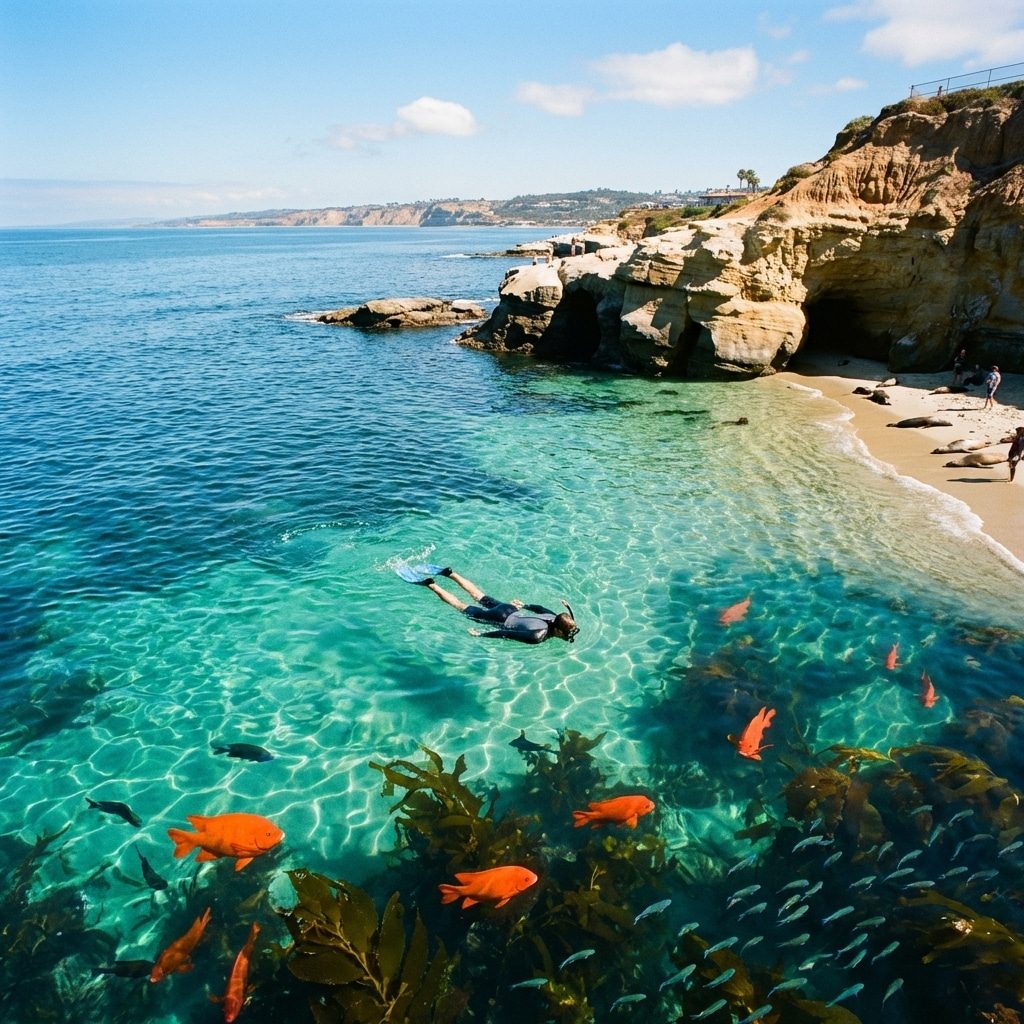
La Jolla Cove draws thousands of snorkelers each year to its protected marine reserve, but conditions vary dramatically by season and time of day. The same kelp forests and rocky reefs that support leopard sharks and sea lions also create rip currents and surge zones that challenge even experienced swimmers.
Quick answer
La Jolla Cove is generally safe for snorkeling during calm summer mornings, but conditions depend on swell direction, tide cycles, and your swimming ability. The protected marine reserve has minimal boat traffic and lifeguard oversight during daylight hours, yet strong currents near the point, territorial sea lions during pupping season (May through July), and afternoon wind chop require advance planning. Beginners should stay near shore in the sandy entry area, while the outer reef and kelp beds demand comfort in open water and surge.
The San Diego County lifeguard service records roughly 150 water rescues per year at La Jolla Cove, most involving snorkelers who underestimated afternoon conditions or ventured beyond their skill level. The cove sits at the southern edge of the San Diego-La Jolla Underwater Park Ecological Reserve, a 6,000-acre marine protected area established in 1971, where fishing and shell collecting are prohibited but human swimming is encouraged. That protection has rebuilt populations of California spiny lobster, garibaldi, and giant sea bass, making the reserve one of the most biodiverse snorkeling sites on the West Coast. Whether snorkeling La Jolla Cove is safe depends on three shifting variables: ocean swell, marine life behavior, and your own water competency. Winter swells from the northwest create shore break and backwash that make entries dangerous even for strong swimmers, while summer south swells bring warmer water but occasional rip currents near the rocky point. The kelp canopy at the cove's eastern edge provides shelter from currents but also reduces visibility and can tangle inexperienced snorkelers. Leopard sharks gather in the shallow sand flats from June through December, posing no threat to humans, but California sea lions occupy the rocky shelves year-round and become aggressive during breeding season when protecting pups. Morning entry between six and ten offers the flattest surface conditions and highest underwater visibility, typically exceeding twenty feet in summer and ten feet in winter. Afternoon westerly winds roughen the surface by early afternoon, and weekend crowds after eleven stir up sand in the entry zone. The cove's eastern entry point near the sea wall provides a sandy bottom and gradual depth increase to twelve feet, suitable for novice snorkelers, while the western edge near the point drops to thirty feet with rocks and kelp that demand open-water confidence. Local dive shops and the San Diego Lifeguard Service both recommend staying inside the buoy line that marks the reserve boundary, where the bottom remains visible and currents are weakest. Snorkelers considering is it safe to snorkel in La Jolla Cove should check the NOAA surf forecast for swell height and period before entering. Swells below three feet with periods above ten seconds indicate safe conditions, while anything above four feet or below eight seconds suggests hazardous shore break. The San Diego Lifeguard Service maintains a staffed tower at the cove from nine in the morning until sunset during summer months, with reduced winter hours. Water temperature ranges from fifty-nine degrees Fahrenheit in winter to sixty-eight in late summer, cold enough that most snorkelers wear at least a shorty wetsuit to prevent hypothermia during extended sessions.
“The San Diego County lifeguard service records roughly 150 water rescues per year at La Jolla Cove, most involving snorkelers who underestimated afternoon conditions or ventured beyond their skill level.”
The safest time to snorkel at La Jolla Cove is during the early morning hours when water conditions are calmest. Monitoring local tide charts and swell reports is essential, as changing conditions significantly impact visibility and water safety.
65°F–70°F water; warm air
Increased boat traffic and tourism require heightened awareness.
55°F–60°F water; cool air
Waters are colder and prone to higher surge.
—
This window provides the calmest water and highest visibility for snorkeling.
Verdict: The best time to snorkel is weekday mornings, particularly in late summer or early autumn when water temperatures are at their peak and swell activity is typically lower.
La Jolla Cove's beauty masks real hazards that catch inexperienced snorkelers off guard. Understanding these risks before entering the water prevents injury and ensures a safer experience.
Entering water during afternoon swells or high surf
Check surf reports and ocean conditions before your session. Mornings offer the calmest water, and lifeguards can advise on current safety levels.
Swimming alone or without a dive flag
Always snorkel with a buddy and use a bright surface float. Solo snorkeling prevents anyone from assisting if you encounter trouble or strong currents pull you offshore.
Ignoring sudden changes in water clarity or temperature
Murky water or temperature drops signal changing ocean conditions that can bring stronger currents. Exit the water and reassess from shore rather than pushing deeper into the cove.
Getting too close to sea lions or harbor seals
Maintain at least 50 feet from all marine mammals—they bite when threatened, especially during pupping season. Observe from a distance and never attempt to touch or feed wildlife.
Misjudging the swim back against currents and fatigue
Currents strengthen through the afternoon, making return swims exhausting. Turn back while you still have 60% of your energy and stay aware of how far offshore you've drifted.
La Jolla Cove sits within a protected marine reserve with strict regulations designed to safeguard wildlife and ensure swimmer safety. Following these rules helps preserve the ecosystem while keeping conditions safe for all visitors.
La Jolla Cove is accessible to the public daily. Lifeguard services monitor the area to assist with visitor safety during designated hours.
La Jolla Cove is a public beach and marine reserve maintained by the City of San Diego. Access to the shoreline and the water is provided to the public at no cost.
Verdict: A typical visitor pays 0 USD for entrance, as access to the beach and cove is provided free of charge.
Everything you need to know about is it safe to snorkel in la jolla cove
Generally, it is considered safe to snorkel in La Jolla Cove, provided you are a confident swimmer and ocean conditions are calm. Being part of a protected marine reserve, the waters host diverse marine life, but visitors should always remain aware of their surroundings and current conditions.
Lifeguards are present to oversee beach activities, though coverage can vary based on season and staffing. We recommend checking the official lifeguard station updates before entering the water to ensure the area is suitable for swimming.
The best arrival window is 06:00–10:00, when mornings offer the calmest water conditions and easier parking. Planning your visit during these hours helps you avoid afternoon winds and peak visitor crowds that make it harder to determine if it is safe to snorkel in La Jolla Cove.
It can be safe to snorkel in La Jolla Cove with children if they are strong swimmers and accompanied by adults at all times. Supervision is critical given that the underwater terrain is natural and waves can change quickly.
Always check for rip currents and visibility levels before heading out. While many ask is it safe to snorkel in La Jolla Cove, the answer often depends on your personal experience level and the daily marine report.
Access to the area is free, with an entrance fee of 0 USD. You can enjoy the beach and water access at any time during the open hours of 00:00–23:59 daily.
For your safety, remain within designated swim zones and avoid touching the local wildlife, such as leopard sharks or sea lions. Respecting the protected status of the San Diego ecological reserve ensures a better experience for all snorkelers.
La Jolla Kayak and Snorkel Tours
Read more Tickets & toursLa Jolla Snorkel Rentals and Tours
Read more GuideLa Jolla Cove Snorkeling Conditions
Read more Tickets & toursLa Jolla Shores Snorkeling
Read more GuideBest La Jolla Snorkeling Tours
Read more Tickets & toursLa Jolla Leopard Shark Snorkeling
Read more