English| EUR
Suggested for you
More currencies
Choose a language
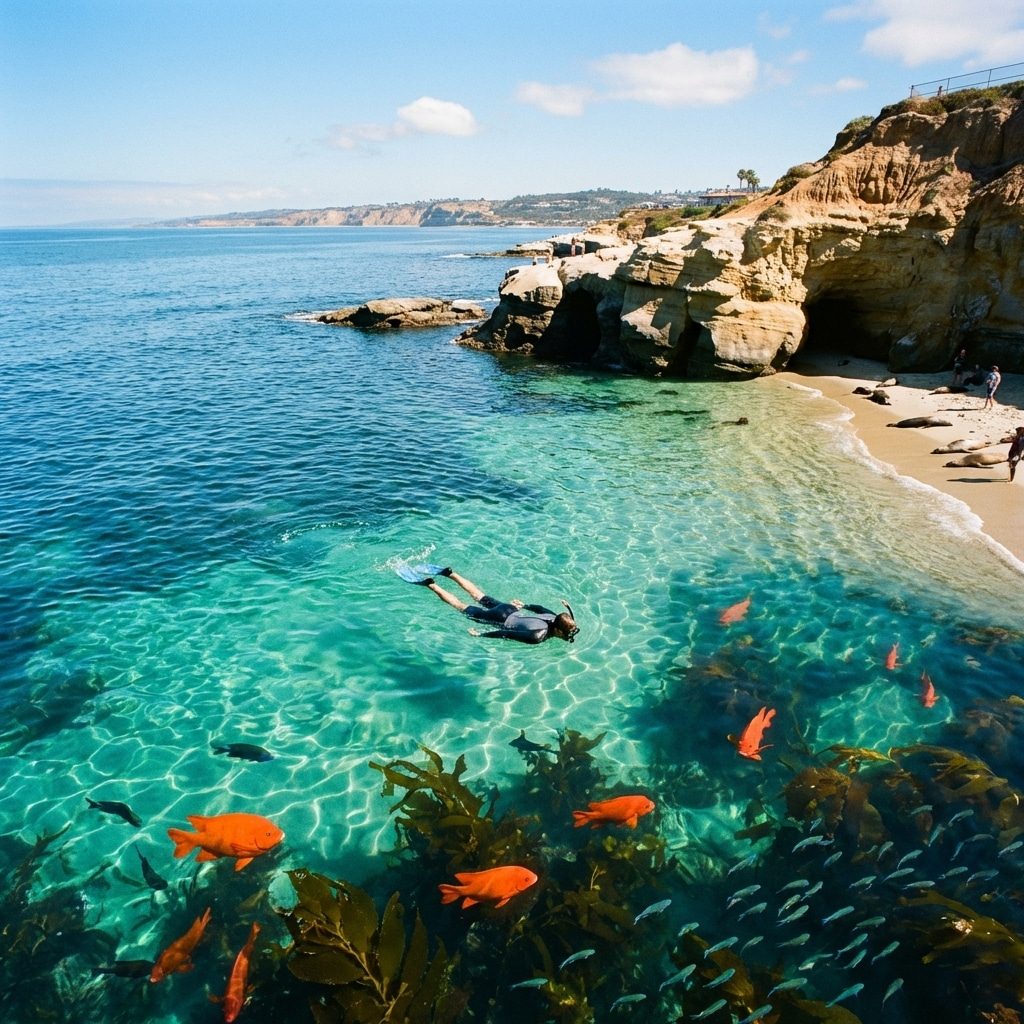
La Jolla Cove sits inside a protected ecological reserve where Pacific swells, tidal exchange, and seasonal plankton blooms shape underwater visibility day by day. This guide decodes the factors that determine whether you'll see garibaldi darting through kelp forests or spend your swim in murky green water.
Quick answer
Snorkeling la jolla cove conditions are best during calm summer mornings from June through September when visibility reaches 15 to 30 feet and surge remains minimal. Winter months bring stronger swells and reduced clarity, while spring plankton blooms can temporarily cloud the water. Arrive between 6:00 and 10:00 AM before afternoon winds stir up sediment and marine layer fog burns off the coastline.
The cove's protected crescent shape filters the worst Pacific energy, but even minor swells compress into powerful surge inside the shallow entry zone. Water clarity follows a seasonal rhythm tied to ocean temperature, nutrient upwelling, and storm runoff from the San Diego River watershed. Summer thermoclines stratify the water column, trapping sediment near the bottom and leaving the surface layer gin-clear. Winter storms churn the entire water column, suspending particles that scatter light and reduce visibility to under ten feet. Marine layer fog and offshore wind direction control morning conditions more than any tide chart. When the June Gloom layer sits thick over the coast, diffuse light penetrates poorly even in clear water. Once the fog burns off by mid-morning, direct sunlight reveals the kelp canopy and rocky reefs in full color. Afternoon westerlies generate surface chop that degrades snorkeling la jolla cove conditions rapidly after noon, turning flat morning water into a washing-machine entry by 2:00 PM. The reserve's no-take status has rebuilt fish populations to densities rare along Southern California's developed coast. Garibaldi, California's state marine fish, patrol the kelp in numbers that startle first-time visitors. Leopard sharks rest in the sandy channels during summer, and juvenile horn sharks wedge into rock crevices year-round. These encounters depend entirely on visibility, which swings from 30-foot clarity to five-foot soup within 48 hours based on swell direction and plankton concentration. Local surf reports and the Scripps Pier buoy data offer real-time proxies for cove conditions, though the only true verification is walking to the cliff edge and looking down into the entry zone before gearing up. Water temperature ranges from 57°F in February to 68°F in August, cold enough to justify a wetsuit in every season. The ecological reserve boundary prohibits fish feeding and shell collecting, rules enforced by regular patrol. Free access to the beach and park means no gate controls crowd density, so summer weekends pack the small entry beach by 10:00 AM with snorkelers, swimmers, and shore divers competing for the same launch window.
“Summer thermoclines stratify the water column, trapping sediment near the bottom and leaving the surface layer gin-clear.”
The best arrival window is 06:00–10:00, as morning hours offer the best water visibility before afternoon winds and crowds increase.
Water 68°F–72°F; calmest conditions
Warmer water temperatures attract marine life, though weekend crowds are heavy.
Water 58°F–62°F; potential for surf
Colder water necessitates thicker wetsuits, but visibility can be high on calm days.
Water 62°F–68°F; variable winds
Spring and fall offer a balance of temperate water and fewer crowds during midweek visits.
Verdict: Plan your visit between 06:00 and 10:00 during the shoulder months of May or September for optimal visibility and fewer crowds.
La Jolla Cove is accessible to the public 24 hours a day, seven days a week. The beach and park area remain open year-round for visitors.
La Jolla Cove is located at 1100 Coast Blvd, La Jolla, CA 92037. The most direct approach is by car via I-5, exiting toward La Jolla Village Drive or Ardath Road.
Take I-5 to La Jolla Village Drive and follow signs toward La Jolla Cove
MTS Route 30 to La Jolla Blvd & Pearl St, followed by a short local transit or ride-share
From Ellen Browning Scripps Park, follow the sidewalk paths down to the beach access point
Parking in the immediate vicinity is limited to street spots; arriving early helps secure a space before the lot fills up. Use the designated beach stairs at 1100 Coast Blvd for direct access to the water.
Confirm you have the right gear and conditions knowledge before entering the water at La Jolla Cove.
La Jolla Cove sits within a protected marine reserve with strict regulations to preserve the ecosystem. Violating these rules carries fines and jeopardizes access for future visitors.
Everything you need to know about snorkeling la jolla cove conditions
The snorkeling La Jolla Cove conditions vary based on tide levels, swell, and wind, which typically affect water clarity. You should check local lifeguard reports before entering the water to ensure safe conditions for swimming and diving.
There is no entrance fee to visit the beach and park area at the cove. Access is free to the public for recreational activities like swimming and shore-based observation.
The best arrival window is 06:00–10:00. These morning hours offer the best water visibility before afternoon winds and crowds increase.
The cove is open daily from 00:00–23:59. You can visit at any time, but water activities are best planned around daylight and tidal shifts.
Beginners often join a La Jolla snorkeling tour to better understand local aquatic safety and navigation. These guided experiences provide context on how to interpret local marine life behavior and ocean currents.
The area is a protected marine reserve, often home to the bright orange Garibaldi, leopard sharks, and harbor seals. These species thrive in the protected ecosystem of the underwater park.
High winds or significant swell can reduce visibility and make entry difficult, which is why checking snorkeling La Jolla Cove conditions is vital. Calm days in the morning provide the most comfortable experience for visitors.
Safety is paramount, so always observe the lifeguard warnings and respect the protected marine environment. Staying within designated zones helps ensure a positive experience for all swimmers and divers.
La Jolla Kayak and Snorkel Tours
Read more Tickets & toursLa Jolla Snorkel Rentals and Tours
Read more Tickets & toursLa Jolla Shores Snorkeling
Read more GuideIs It Safe to Snorkel in La Jolla Cove
Read more GuideBest La Jolla Snorkeling Tours
Read more Tickets & toursLa Jolla Leopard Shark Snorkeling
Read more